Air Compressor Leaks: How to Find, Fix, and Prevent Energy Loss in Your System
|
What causes air compressor leaks and how do you fix them? Air compressor leaks are caused by worn seals, loose fittings, damaged hoses, or aging components. Fix them by tightening connections, replacing worn parts, and using detection methods like ultrasonic tools or soap testing. Prevent leaks with regular maintenance, system audits, and pressure monitoring. |
Quick Stats on Air Compressor Leaks:
- 10–30% of compressed air is typically lost to leaks
- A single 1/8” leak can cost hundreds per year
- Multiple leaks can waste thousands annually in energy
- Leaks increase compressor runtime and wear
Why Air Compressor Leaks Are a Bigger Problem Than You Think
Air compressor leaks aren’t just a maintenance issue; they’re one of the largest hidden sources of energy waste in industrial facilities.
- Most systems lose 10–30% of compressed air due to leaks
- Increased energy consumption drives up operating costs
- Reduced system pressure impacts production efficiency
- Longer compressor runtimes lead to premature equipment wear
For example, a small leak in a 100 PSI system can cost hundreds of dollars per year, while multiple leaks across a facility can easily exceed thousands in wasted energy.
Bottom line: Even small leaks can cost thousands of dollars per year in wasted energy and reduced performance.
What Causes Air Compressor Leaks?
Most air compressor leaks come down to wear, vibration, or system design issues.
Common causes include:
- Loose fittings and connections
- Worn O-rings and seals
- Damaged hoses and tubing
- Aging filters, regulators, and drains
- Vibration loosening internal fasteners
- Poor installation or system design
Many of these issues start small but compound quickly if left unaddressed.
Where Do Air Compressor Leaks Typically Occur?
Air leaks tend to show up in predictable areas across most systems.
|
Leak Location |
Why It Happens |
Risk Level |
|
Hose connections |
Frequent movement |
High |
|
Quick couplers |
Wear from repeated use |
High |
|
O-rings & seals |
Heat and pressure degradation |
High |
|
Drain valves |
Sticking or corrosion |
Medium |
|
Filters/regulators |
Age and contamination |
Medium |
Focusing inspections on these areas can help you identify leaks faster.
What Are the Signs of Hidden Air Compressor Leaks?
Many leaks aren’t visible or audible. Watch for:
- Unexpected drops in system pressure
- Compressor running more frequently than normal
- Increased energy bills without higher demand
- Inconsistent tool or equipment performance
How to Find Air Compressor Leaks
Finding leaks early is critical to minimizing energy loss and system strain.
1. Listen for leaks
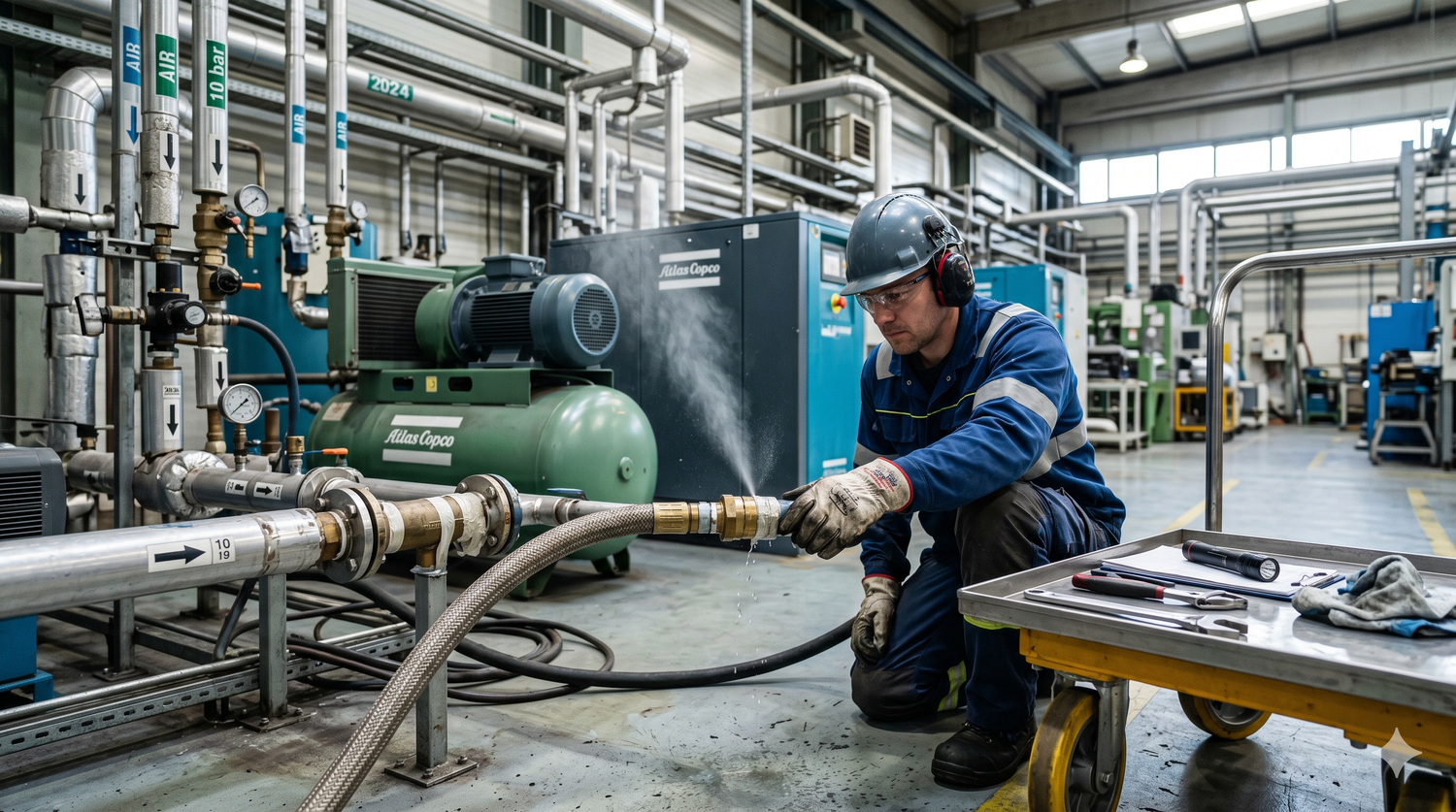
A simple walk-through while the system is running can reveal leaks.
- Listen for hissing sounds around hoses and fittings
2. Use soap bubble testing
Apply soapy water to suspected areas.
- Bubbles will form where air is escaping
3. Use ultrasonic leak detection
Ultrasonic leak detection is the most effective method for industrial environments:
- Detects high-frequency sound not audible to humans
- Works in noisy facilities
- Identifies even small, hidden leaks
Pro Tip:
Most facilities only catch audible leaks. Ultrasonic detection can identify leaks that are 20–30% smaller and completely silent, making it one of the fastest ways to reduce hidden energy loss.
4. Monitor system performance
Look for signs of poor system performance, like:
- Pressure drops
- Increased compressor runtime
- Inconsistent system performance
These signs often indicate leaks you can’t see or hear.
How to Fix Air Compressor Leaks (Step-by-Step)
Once leaks are identified, most can be resolved quickly with the right approach.
- Tighten all fittings and connections
- Replace worn components (filters, seals, O-rings)
- Repair or replace damaged hoses
- Fix or replace leaking drains
- Secure internal fasteners
- Re-test the system to confirm leaks are eliminated
Even small fixes can deliver immediate efficiency gains.
When Should You Repair vs. Replace Air Compressor Components?
Not every leak should be treated the same—some signal larger system issues.
|
Situation |
Best Action |
|
Minor fitting leak |
Repair |
|
Worn seals or O-rings |
Replace |
|
Cracked or damaged hoses |
Replace |
|
Repeated failures |
Replace component |
|
System-wide inefficiency |
Consider a system upgrade |
If your system is experiencing repeated leaks or widespread inefficiency, it may be more cost-effective to evaluate a system upgrade rather than continue repairing individual components.
How Much Do Air Compressor Leaks Cost?
Air leaks are a hidden operational expense that many facilities underestimate.
- 10–30% energy loss is common in compressed air systems
- Increased runtime drives up electricity costs
- Maintenance and downtime add indirect costs
- Reduced system performance impacts production output
A single small leak can cost hundreds per year. Multiple leaks can quickly add up to thousands of dollars in losses.
How to Prevent Air Compressor Leaks
Preventing leaks is far more cost-effective than fixing them after the fact.
Best practices include:
- Establish a preventative maintenance schedule
- Conduct weekly system inspections
- Implement a leak detection program
- Perform regular system audits
- Ensure proper installation practices
Consistency is key. Small checks prevent major losses.
Why a Compressed Air System Audit Matters
A system audit goes beyond fixing leaks. It identifies opportunities for full system optimization.
With a professional audit, you can:
- Track kW usage and pressure performance
- Benchmark system efficiency
- Identify hidden leaks and inefficiencies
- Calculate ROI from system improvements
This is where facilities move from reactive maintenance to proactive performance optimization.
Air Compressor Leak FAQs
What is the most common cause of an air compressor leak?
Worn seals, loose fittings, and aging hoses are the most common causes of air compressor leaks.
How much air loss is normal in a compressed air system?
Most systems lose between 10–30% of compressed air due to leaks.
Can small air leaks really impact energy costs?
Yes, small air leaks can really impact energy costs. They can add up to thousands of dollars in wasted energy annually.
What is the best way to detect air leaks?
Ultrasonic leak detection is the most accurate and efficient method to detect leaks in compressed air systems.
Should I repair or replace leaking components?
If the issue is recurring or widespread, air compressor replacement is usually the better long-term solution.
Stop Air Compressor Leaks Before They Drain Your System
If your system is leaking, you’re losing more than air—you’re losing efficiency, performance, and money.
With TMI Compressed Air, you can:
- Identify hidden leaks with advanced detection tools
- Benchmark system performance with real data
- Get clear recommendations to reduce energy waste