Compressed Air Treatment: Why It’s Important and What You Need
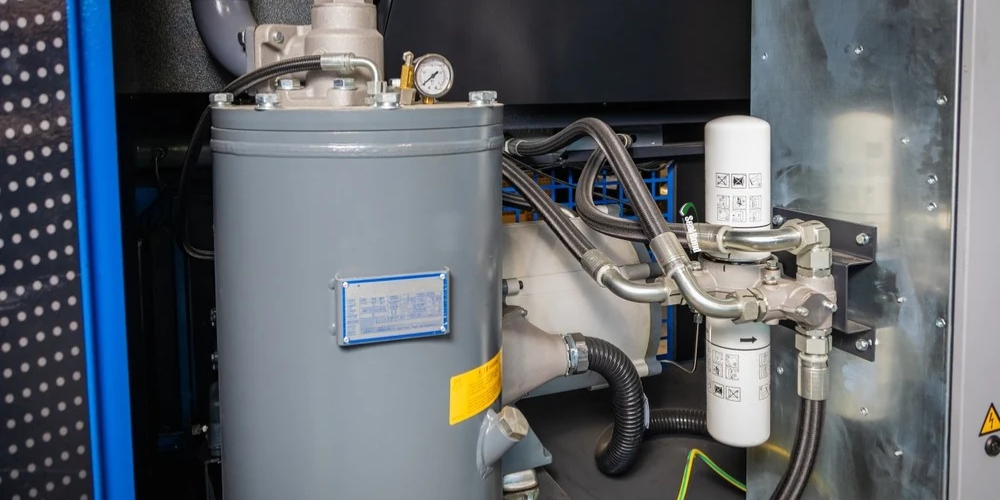
Downtime is expensive, and your air compressor works in some of the harshest conditions in your facility. Heat, humidity, dirt, oil, and debris all find their way into the system. Without the right compressed air treatment, those contaminants travel downstream into your tools, your piping, and sometimes your product.
The good news? A well-designed treatment setup handles most of that before it ever becomes a problem. Below, we'll cover what compressed air treatment is, why it matters, and exactly what equipment you need to do it right.
Key Takeaways:
- Compressed air treatment removes water, oil, and particles so clean air reaches your tools and products.
- Most systems need three core pieces: a dryer, filtration, and an oil-water separator.
- The U.S. DOE's 2016 Compressed Air Sourcebook says every extra 2 psi of pressure costs about 1% more energy, so clogged filters raise your bill.
- ISO 8573-1 classes define how clean your air must be.
What Is Compressed Air Treatment?
Compressed air treatment removes water, oil, and solid particles from compressed air before it reaches your equipment or product. Dryers, filters, and separators work together to bring the air to the quality level your application requires.
Your compressor pulls in ambient air that already carries moisture, dust, and hydrocarbons, and compression concentrates all of it.
|
The rule we always come back to is simple: clean air in = clean air out. |
Why Is Compressed Air Treatment Important?
Compressed air treatment is important because it protects three things: your equipment, your product, and your energy budget. Skip it, and contaminants corrode piping, wear out pneumatic tools, ruin finishes, and force your compressor to work harder than it should.
It protects your equipment.
Water and particles are the biggest threats to system life. According to the U.S. Department of Energy's 2016 sourcebook, Improving Compressed Air System Performance, air leaving the aftercooler is typically saturated, and further cooling in your piping causes condensation that leads to corrosion and contamination at points of use. Unchecked contaminants shorten the lifespan of machinery and lead to unplanned breakdowns.
It protects your product.
If you use compressed air for painting or coating, a little oil, water, or dirt can ruin a finish and send parts back for rework. In food and pharmaceutical facilities, the stakes are higher. Under Edition 9 of the SQF Food Safety Code (section 11.5.5), compressed air that contacts food or food-contact surfaces must be "clean and present no risk to food safety," according to Donaldson's guide to the SQF compressed air standard.
It protects your energy budget.
Clogged or undersized treatment equipment creates pressure drop, so your compressor runs at higher pressure to compensate. In its 2016 sourcebook Improving Compressed Air System Performance, the U.S. Department of Energy notes that in many industrial facilities, air compressors use more electricity than any other type of equipment. Because treatment equipment sits directly in the airflow, a dirty filter or poorly sized dryer adds pressure drop that drives that electricity use even higher.
What Contaminants Does Compressed Air Treatment Remove?
Compressed air treatment targets three contaminant types: water, oil, and solid particles. Each one comes from a different source and causes a different kind of damage, so each one needs its own type of treatment equipment.
Compressed Air Contaminants |
|||
|---|---|---|---|
|
Contaminant |
Where It Comes From |
What It Damages |
Treatment Equipment |
|
Water (vapor and liquid) |
Humidity in intake air, condensation after compression |
Piping (rust and scale), tools, finishes, product quality |
Aftercooler, dryer, condensate drains |
|
Oil (aerosol and vapor) |
Lubricated compressor carryover, airborne hydrocarbons |
Paint and coating finishes, food and pharma product, seals |
Coalescing filters, activated carbon filters, oil-water separator (for condensate) |
|
Solid particles |
Dust in intake air, rust and scale from piping, wear metals |
Valves, cylinders, nozzles, instruments |
Particulate filters, inlet filters |
For a deeper breakdown of each contaminant, see our guide to the three major types of contaminants in compressed air systems.
What Compressed Air Treatment Equipment Does My Facility Need?
Most facilities need three core pieces of compressed air treatment equipment: a dryer to remove moisture, filters to remove oil and particles, and an oil-water separator to clean condensate before disposal. The exact models and sizes depend on your compressor, your air demand, and how clean your application needs the air to be.
Browse our full lineup of compressed air treatment equipment to see what's available.
1. Compressed Air Dryers
Compressed air dryers remove water vapor from the air stream before it can condense in your piping. Refrigerated dryers are the go-to choice for most general manufacturing applications. Desiccant dryers are the better fit when you need very dry air or have lines exposed to freezing temperatures.
Comparing Common Compressed Air Dryers |
||
|---|---|---|
|
Dryer Type |
Typical Pressure Dew Point |
Best For |
|
Refrigerated |
35°F to 40°F (per the DOE's 2016 sourcebook) |
General manufacturing, tools, most plant air |
|
Desiccant |
Down to -40°F and lower (ISO 8573-1 water Class 2 or better) |
Food, pharma, painting, outdoor or unheated lines |
|
Membrane |
Down to -40°F, with added purge air loss (per the DOE) |
Small point-of-use applications |
Our Take: In Michigan, we size dryers for summer humidity, not the annual average. A dryer that keeps up in January can fall behind on a muggy July afternoon. If you've got air lines running through unheated warehouse space or outdoors, plan for winter freeze-ups too. A refrigerated dryer won't protect those lines.
2. Compressed Air Filters
Compressed air filters remove oil aerosols, vapors, wear metals, and solid particles that a dryer can't catch. Unfiltered air leads to corrosion, damaged tools, rejected product, and unplanned downtime.
Choosing the right filter depends on your application, your compressor, and your overall system. Most facilities use a combination:
- Particulate filters capture dust, rust, and pipe scale.
- Coalescing filters remove oil and water aerosols.
- Activated carbon filters remove oil vapor and odors for sensitive applications like food and pharma.
Replace filters on schedule, since a clogged filter restricts airflow and drives up energy costs. If you need extra protection close to sensitive equipment, here's why you might need an inline filter for your compressed air system.
3. Oil-Water Separators
An oil-water separator removes oil from the condensate your compressor, dryers, and filters drain off, so the remaining water can be disposed of safely. If you run a lubricated compressor, you need one.
Lubricated compressors have internal separators, but some oil always carries over into the airstream and ends up in condensate. You can't send that mixture straight down the drain. The DOE's 2016 sourcebook states that "contaminated condensate requires removal of lubricant before the condensate is discharged to a sewer system," and that treatment should meet local codes. According to Atlas Copco's guide to condensate disposal, many regulations require less than 10 to 20 mg of oil per liter before sewer discharge.
Running an oil-free air compressor? You'll still produce condensate, but it won't carry compressor oil, which simplifies disposal.
|
Not sure your treatment equipment is sized correctly? Schedule a compressed air system assessment with TMI. |
How Does Air Treatment Prevent Scale and Corrosion in Your System?
Proper air treatment prevents scale and corrosion by removing water before it condenses inside your piping. Dry air can't rust steel pipe, and without rust there's no scale to flake off and clog valves, filters, and tools downstream.
Once scale builds up, descaling a compressed air system is a disruptive fix. It usually means downtime, cleaning or replacing pipe sections, and swapping clogged filter elements. Wouldn't you rather stop it at the source?
Our Take: Descaling treats the symptom. The long-term fix is a properly sized dryer paired with corrosion-resistant piping. That's one reason we recommend Infinity™ aluminum piping for new installs and system expansions. Aluminum doesn't rust the way black iron pipe does, so it won't shed scale into your airstream.
How Do You Maintain Compressed Air Treatment Equipment?
You maintain compressed air treatment equipment by replacing filter elements on schedule, checking drains, monitoring pressure drop, and servicing dryers and separators regularly. Good compressed air management keeps treatment working the way it was designed to.
The energy side of this is easy to overlook. According to the U.S. Department of Energy's 2016 sourcebook, Improving Compressed Air System Performance, for systems around 100 psig, every 2 psi increase in discharge pressure raises energy consumption by about 1% at full output. When a dirty filter restricts flow, operators often bump up pressure to compensate, and the electric bill goes up with it.
Air Treatment Maintenance Checklist |
||
|---|---|---|
|
Equipment |
What to Check |
Why It Matters |
|
Filters |
Differential pressure, element replacement interval |
Clogged elements raise pressure drop and energy costs |
|
Condensate drains |
Drains open and discharge properly; no stuck or leaking drains |
Stuck drains send water downstream; leaking drains waste air |
|
Refrigerated dryers |
Dew point reading, condenser coils clean |
Dirty coils reduce drying performance, especially in summer |
|
Desiccant dryers |
Desiccant condition, purge cycle |
Spent desiccant lets moisture through |
|
Oil-water separators |
Filter media saturation, discharge quality |
Saturated media can put you out of compliance with local codes |
At TMI, our AIRMATICS™ remote monitoring system tracks performance in real time, so you can catch rising pressure drop or dew point issues before they become downtime. Pair it with a preventative maintenance plan or our energy efficiency services to keep treatment equipment on schedule and efficient.
Work With TMI on Your Compressed Air Treatment
Proper compressed air treatment keeps your compressors running longer, protects your product, and keeps energy costs in check. We supply, install, and service treatment equipment for Michigan manufacturers, across every major brand. And if something goes wrong, our 24/7/365 emergency service comes with a three-hour on-site guarantee.
Ready to improve your air quality? Get in touch with the TMI team to talk through your treatment setup.
Compressed Air Treatment FAQs
What are the three main types of compressed air treatment equipment?
The three main types are compressed air dryers, compressed air filters, and oil-water separators. Dryers remove water vapor, filters remove oil aerosols and solid particles, and oil-water separators clean condensate so it can be disposed of safely. Most systems also use aftercoolers and condensate drains to support these three core components.
Do oil-free air compressors need compressed air treatment?
Yes. Oil-free compressors don't add lubricant to the air, but they still pull in humidity, dust, and airborne hydrocarbons from the surrounding environment. You'll still need a dryer and filtration to meet your required air quality. Condensate from oil-free compressors is typically easier to dispose of, since it doesn't carry compressor oil.
How often should compressed air filters be replaced?
Follow the manufacturer's recommended replacement interval, and replace elements sooner if differential pressure climbs. It’s estimated that every 2 psi of added pressure raises energy use by about 1%, so a clogged filter costs money even before it lets contaminants through.
What is the difference between a refrigerated dryer and a desiccant dryer?
A refrigerated dryer cools the air to condense out moisture, typically reaching a pressure dew point of 35°F to 40°F. A desiccant dryer uses moisture-absorbing material to reach much lower dew points, often -40°F, making it a better fit for sensitive applications and lines exposed to freezing temperatures.
Can I pour air compressor condensate down the drain?
Not if it contains oil. Contaminated condensate needs lubricant removed before it's discharged to a sewer. Many regulations require less than 10 to 20 mg of oil per liter. An oil-water separator handles this. Always check your local sewer authority's limits.